Fair Go Casino Trust, Licence and Safety
 Available in AU
Fair Go Casino should be assessed in layers rather than reduced to a one-word “legit” or “safe” assessment. The currently available information says the brand has operated since 2017 and independent sources identify Deckmedia N.V. as the operator. Multiple independent sources describe a Curaçao jurisdiction connection, but this available regulator material has not verified a current Curaçao licence number or expiry, so no licence number is published here. In Australia, a current search of ACMA’s register of licensed interactive wagering providers does not show Fair Go, and ACMA states that online casino services are banned services for providers to offer to people in Australia. Fair Go separately provides 24/7 live chat, deposit limits and a self-exclusion mechanism. Those product controls are relevant trust signals, but they are not substitutes for Australian regulatory authorisation.
Table of Contents
- A layered way to assess Fair Go
- Operator and operating history
- What can be said about the Curaçao connection
- No Australian local licence was verified
- What ACMA says about online casinos
- Promotions do not settle the trust question
- Support availability is a separate operational signal
- Responsible-gambling controls Fair Go currently describes
- BetStop does not automatically cover an offshore casino
- Verification controls add friction before payout
- How to read reputation and complaint data
- Practical trust checks before depositing
- What this trust review can and cannot establish
- What the trust evidence supports
- Fair Go trust and licence FAQ
A layered way to assess Fair Go
Casino trust questions often get compressed into labels such as “legit”, “safe” or “scam”. Those labels hide the evidence a reader actually needs. A more useful method is to ask separate questions: Who is identified as the operator? How long has the brand existed? What licence can be verified? Is the service on the Australian regulator’s register? What support and account controls are available? What do player complaints describe, and which of those reports can be independently substantiated?
Fair Go produces different answers at each layer. The brand has a multi-year operating history and identifiable account, payment and support functions. It also sits outside the Australian-licensed wagering register, and the Australian legal framework treats online casino services differently from locally licensed online wagering. Those facts can coexist. One does not cancel out the other.
Operator and operating history
The currently available information records Fair Go as operating since 2017. Independent sources identify Deckmedia N.V. as the operator. That operator attribution is useful because it connects the casino brand to an entity name that can be checked across industry sources rather than treating the website name as the whole corporate identity.
Operating history is a descriptive fact, not a guarantee. A site that has existed for years has a longer public record than a new launch, but age alone does not prove payout reliability, regulatory coverage or future conduct. It is therefore one input in a trust assessment, not a assessment.
The same caution applies to operator information from review sites. Multiple independent sources support the Deckmedia N.V. attribution. It does not invent a current office address, ownership chain or corporate status beyond what the available sources support.
What can be said about the Curaçao connection
Multiple independent sources currently describe Fair Go as operating under Curaçao jurisdiction and associate the brand with Deckmedia N.V. That is sufficient based on the available independent sources to describe the jurisdiction connection as a sourced operating fact. It is not sufficient to publish a specific licence number or expiry date without regulator-level verification.
This distinction matters because current third-party pages do not agree cleanly on licence details. Some publish specific historical-looking licence numbers, while another prominent review source states that it cannot identify a current gambling licence. Rather than choose one number from conflicting secondary material, this section omits the number and keeps the claim at the level the evidence supports.
A licence jurisdiction and an Australian local licence are also separate concepts. A Curaçao connection does not imply that Fair Go is licensed by an Australian state, territory or federal regulator.
No Australian local licence was verified
ACMA maintains a register of licensed interactive wagering providers. A current register search of that current register found no match for “Fair Go”. The appropriate statement is therefore narrow: no Australian local licence was verified for Fair Go in the ACMA register.
That wording is intentionally different from claiming that the register covers every kind of gambling business in the world or that absence from the register by itself proves every possible legal finding. The register is the authoritative Australian source for licensed interactive wagering providers. Fair Go is not being represented here as one of those Australian-licensed providers.
For the broader federal framework, read the dedicated Fair Go and Australian Online Casino Law. It explains the provider-side rules without turning them into an unsupported statement about individual criminal liability.
What ACMA says about online casinos
ACMA’s current Interactive Gambling Act guidance states that the Act makes it illegal for gambling providers to offer some online services to people in Australia and explicitly lists online casinos among the banned services. ACMA also says banned services must not be advertised in Australia. This is a provider-side regulatory statement and is the right frame for understanding why an offshore casino’s operational accessibility is not the same thing as Australian authorisation.
ACMA’s current consumer guidance also warns that services outside the licensed framework may not provide the same customer protections. That is a practical consideration for dispute expectations. If a casino is not an Australian-licensed interactive wagering provider, a user should not assume the protections and complaint pathways attached to that licensed sector automatically apply.
These points do not require exaggeration. They are strong enough on their own: Fair Go can be technically accessible while not appearing on the Australian licensed-wagering register, and ACMA treats online casino services as banned services for providers to offer to people in Australia.
Promotions do not settle the trust question
A large welcome offer can be commercially important without answering a licensing or player-protection question. The Fair Go Bonuses and Promotions checks the current offer structure separately, including terms that can change over time. Keeping promotion evidence separate from licence evidence prevents a bonus from being treated as proof of regulatory standing, and prevents a regulatory limitation from distorting unrelated facts about the offer itself.
Support availability is a separate operational signal
The currently available information verifies 24/7 live chat availability from the official Fair Go site and corroborating material. Around-the-clock support is useful because account, bonus, payment and verification issues can require a case-specific answer. It gives players a direct operational route for asking about a pending transaction or account request.
Support availability should not be confused with regulatory escalation. A live-chat agent works for the casino or its service operation. An external regulator or licensed dispute scheme has a different role. This distinction becomes important if a complaint cannot be resolved internally.
For payment-specific problems, keep records of transaction dates, amounts, status messages and chat responses. The Fair Go Withdrawals: Methods, Limits and Timing explains how to separate casino processing from bank, wallet or blockchain delivery.
Responsible-gambling controls Fair Go currently describes
Fair Go’s official responsible-gambling page describes two direct account controls: deposit limits and self-exclusion. It says users can request daily or monthly deposit limits through customer support and can enter a self-exclusion arrangement that freezes the casino account for a chosen period. The same page states that the casino does not permit people under 18 to open an account or use its remote gambling services.
These are concrete product safeguards and belong in a trust review. They show what tools the casino says it provides at account level. They do not establish Australian licensing or prove that the operator is connected to Australia’s national self-exclusion system.
BetStop does not automatically cover an offshore casino
BetStop is Australia’s National Self-Exclusion Register. ACMA currently describes it as a system that lets a person exclude themselves from all Australian-licensed online and phone wagering services in one step. ACMA says the covered providers are the licensed wagering providers connected to the register.
That scope is important. It would be misleading to imply that registering with BetStop necessarily blocks access to Fair Go simply because Fair Go targets Australian readers. Fair Go has not been verified as an Australian-licensed wagering provider, so BetStop should not be presented as Fair Go’s external self-exclusion mechanism.
Fair Go instead describes its own account-level self-exclusion process. Readers who need broader gambling-harm support can also use Australian support services referenced by ACMA, but those services and the casino’s internal controls serve different functions.
Verification controls add friction before payout
Fair Go’s official account-verification material says winnings cannot be processed before account details are verified. It currently lists government-issued photo ID and proof of address as core documents and says further payment-related evidence can be requested. This is a concrete account-control process because it links a payout to identity information.
KYC can reduce some forms of account misuse, but it should not be overinterpreted. A verification process does not prove licensing status, guarantee a dispute outcome or ensure that every withdrawal will be fast. Its role is narrower: it is part of the casino’s account and payout controls.
The Fair Go verification guide covers the current document requirements and the limits of what can be claimed about timing.
How to read reputation and complaint data
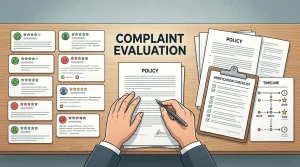
Public casino reviews and complaint databases can reveal recurring topics, but they mix different kinds of evidence. A player review is a report of that person’s experience. An platform rating is a platform’s methodology. A complaint marked resolved or unresolved depends on the platform’s process. None of these should automatically be converted into a verified claim that a casino always behaves in a particular way.
Current third-party coverage of Fair Go is mixed. Some sources present the casino positively and publish licence information; others question the current licensing position. That disagreement is exactly why this section does not reproduce a numerical safety score or choose a winner among review platforms.
The separate Fair Go Complaints and Player Feedback is the place to examine complaint themes. Its job is to distinguish patterns from anecdotes rather than use a handful of reviews as proof.
Practical trust checks before depositing
- Confirm the domain. Use the official Fair Go site rather than a copied login page or unrelated download.
- Read the current cashier. Verify the payment method you intend to use and whether it can also receive withdrawals.
- Read the promotion terms before opting in. Bonus value and wagering conditions are separate from the cash balance.
- Check verification requirements. Fair Go requires identity verification before payout processing.
- Know the regulatory layer. Do not treat access to the site as evidence of an Australian licence.
- Use account controls if needed. Fair Go currently describes deposit limits and self-exclusion on its responsible-gambling page.
- Keep transaction records. Dates, amounts, confirmation messages and support transcripts are more useful in a dispute than memory alone.
This checklist does not tell a reader whether to use the casino. It identifies the evidence points that can be checked before money is committed.
What this trust review can and cannot establish
It can establish the facts represented in the available information and current checks: operating history since 2017, operator attribution to Deckmedia N.V. across independent sources, current 24/7 live chat, Fair Go’s stated deposit-limit and self-exclusion tools, a current KYC requirement before payout, the absence of a Fair Go match in ACMA’s licensed interactive wagering register, and ACMA’s current provider-side treatment of online casino services.
It cannot establish a current Curaçao licence number or expiry from a regulator record in the available regulator material. It also cannot promise that any future dispute will be resolved in a player’s favour, that every withdrawal will meet a headline processing target, or that external review scores are objective facts.
That boundary is useful rather than evasive. A trust assessment is clearer when it separates what is directly verified from what remains disputed or dependent on another authority.
What the trust evidence supports
Fair Go has identifiable operating history, support, account verification and responsible-gambling controls, but those operational facts should not be confused with Australian licensing. The current ACMA register does not show Fair Go, ACMA explicitly lists online casinos among services providers are prohibited from offering to people in Australia, and the available Curaçao-related information does not support publishing a regulator-verified licence number. The most useful assessment is therefore evidence-based and layered: verify the operator and current site functions, understand the limits of the licensing evidence, read the Australian regulatory context, and keep reputation reports separate from facts that can be directly checked.
For the related overview, see Fair Go Australia Review 2026.
Fair Go trust and licence FAQ
Is Fair Go Casino licensed in Australia?
No Australian local licence was verified in ACMA’s current register of licensed interactive wagering providers. The website does not present Fair Go as Australian-licensed.
Does Fair Go have a Curaçao licence?
Multiple independent sources describe Fair Go as operating under Curaçao jurisdiction, but the available regulator material did not verify a current licence number or expiry. For that reason no specific licence number is published here.
Who operates Fair Go Casino?
Independent sources in the currently available information identify Deckmedia N.V. as the operator.
Does Fair Go offer responsible-gambling tools?
Yes. Its current official responsible-gambling page describes daily or monthly deposit limits and a casino-level self-exclusion mechanism.
Is Fair Go covered by BetStop?
BetStop covers Australian-licensed online and phone wagering providers. Because Fair Go was not verified in ACMA’s Australian licensed-provider register, the available information does not claim that BetStop covers Fair Go.